Venice City Centre concentrates the most historically dense and logistically demanding accommodation zone in Italy. Staying here means trading space and quiet for unmatched access to the Rialto Bridge, St. Mark's Square, La Fenice, and the Grand Canal - all reachable on foot, no water taxi required. The boutique hotels in this area sit inside converted palazzi, noble residences, and canal-front buildings that larger chains simply cannot replicate.
What It's Like Staying In Venice City Centre
Venice City Centre is a car-free, bridge-laden urban environment where navigation happens entirely on foot or by vaporetto. Every major landmark is within a 20-minute walk, but those walks involve narrow calli, stepped bridges, and tourist congestion that peaks sharply between 10am and 6pm. Crowds thin noticeably after dinner, when the city shifts into a quieter, more atmospheric version of itself that daytime visitors never experience.
Staying here means waking up inside the historic fabric of Venice - not commuting into it. However, around 80% of Venice's daily visitors are day-trippers, which means streets near Rialto and San Marco can feel saturated by mid-morning. Guests staying in the city centre experience a Venice that changes completely after 7pm, making the in-centre premium easier to justify for those spending evenings locally.
Pros:
- All major sights are walkable, eliminating reliance on water transport for sightseeing
- Evening atmosphere in the historic centre is dramatically quieter and more local-feeling than during the day
- Canal-front and courtyard properties offer architectural experiences unavailable outside this zone
Cons:
- Noise from tourist foot traffic and water traffic is a real factor in rooms facing canals or main routes
- Luggage transport to the hotel requires physical effort - wheeled bags must be carried over bridges
- Room sizes in historic buildings are frequently smaller than equivalent-priced hotels on the mainland
Why Choose Boutique Hotels In Venice City Centre
Boutique hotels in Venice City Centre occupy converted historic structures - 19th-century noble residences, Renaissance-era palazzi, and canal-side buildings - that give guests direct access to Venetian architectural heritage without the institutional feel of large hotel chains. Unlike budget options, boutique properties here typically include curated room design, personalised breakfast service, and location-specific details such as canal views, internal courtyards, or proximity to specific landmarks like La Fenice or the Bridge of Sighs.
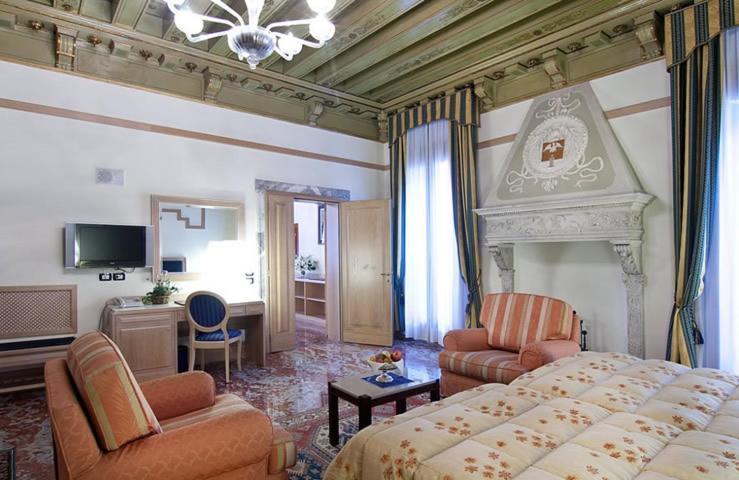
Room interiors in boutique properties tend to feature parquet floors, antique furnishings, or Murano-glass details - elements specific to the Venetian craft tradition. These hotels generally price above standard 3-star accommodation, but the trade-off is a room that functions as part of the cultural experience rather than just a place to sleep. Boutique hotels here rarely exceed around 20 rooms, which means faster check-in, more flexible service, and a quieter internal environment even when the streets outside are busy.
Pros:
- Historically significant buildings with interior design tied directly to Venetian craft traditions
- Smaller guest counts translate to faster, more personalised service at front desk and breakfast
- Location-specific features - canal views, courtyard access, proximity to key theatres and museums - unavailable in generic hotels
Cons:
- Room sizes are constrained by the original building structure and rarely match what the price point suggests in other cities
- Lift access is not guaranteed in older buildings, which matters for guests with heavy luggage or mobility concerns
- Higher demand means availability tightens weeks earlier than in comparable non-Venetian destinations
Practical Booking & Area Strategy
The most strategically positioned boutique hotels in Venice City Centre sit between the Rialto Bridge and St. Mark's Square - a corridor along the Sestiere San Marco that keeps guests within a 15-minute walk of both anchors. Streets like Calle della Mandola, Campo Sant'Angelo, and the canal-front calli near Riva degli Schiavoni offer quieter sleeping environments compared to the high-traffic routes directly adjacent to Rialto market. The vaporetto Line 1 stop at Campo Sant'Angelo connects guests to Santa Lucia Train Station in around 20 minutes, making it the most useful transport axis for arrivals and day-trip departures.
For peak season - late spring through September - boutique hotels in this zone fill up around 6 weeks in advance, and last-minute availability is rare for properties with canal or landmark views. The area around San Zaccaria, just 400 metres from St. Mark's Square, gives direct water-bus access and is among the calmer sleeping zones despite its central position. Booking a room on an internal courtyard or upper floor significantly reduces ambient noise from water traffic and pedestrian routes, a detail worth specifying at reservation.
Key things to do within walking distance include visiting the Peggy Guggenheim Collection on the Grand Canal, attending a performance at La Fenice opera house, crossing the Bridge of Sighs from the water, and exploring the Doge's Palace. The Rialto fish and vegetable market - open early morning on weekdays - is one of the few genuinely local experiences still functioning in the city centre.
Best Value Boutique Stays
These properties deliver strong location credentials and characterful interiors at accessible price points, making them the most practical entry into boutique accommodation in Venice City Centre.
-
1. Hotel A La Commedia
Show on map


 Check-infrom 14:00 until 23:59Check-outuntil 12:00
Just a few rooms left at the best rate!
from€ 166
-
2. Hotel Casa Nicolo Priuli
Show on map


 Check-infrom 14:00 until 23:59Check-outuntil 11:00
Just a few rooms left at the best rate!
from€ 77
Best Premium Boutique Stays
These properties offer higher-specification design, landmark-adjacent positioning, or exclusive features - such as private water taxi landings and landmark views - that justify their elevated positioning in Venice City Centre.
-
3. Corte Di Gabriela
Show on map


 Check-infrom 16:00 until 23:59Check-outuntil 12:00
Hurry – almost gone at this price!
from€ 298
-
4. Hotel Al Ponte Dei Sospiri
Show on map


 Check-infrom 14:00 until 23:59Check-outuntil 12:00
Rooms filling fast – secure the best rate!
from€ 324
Smart Travel & Timing Advice For Venice City Centre
Venice City Centre operates on a sharply defined seasonal curve. Carnival in February and the summer period from June through August push boutique hotel occupancy to near capacity, with prices in premium properties climbing significantly above shoulder-season rates. April, May, and October represent the strongest value window - crowds are manageable, temperatures are comfortable for walking, and boutique hotels in San Marco and Rialto remain bookable within 3 to 4 weeks of arrival rather than requiring months of lead time.
November and early December bring acqua alta - periodic high-water flooding that affects low-lying streets and campos. While it rarely disrupts upper-floor hotel rooms, it does impact mobility and can close some ground-floor restaurant access temporarily. January and early February outside Carnival are the quietest weeks of the year in the city centre; prices drop and major sites like the Doge's Palace and Guggenheim see genuinely short queues. A minimum of 3 nights in the city centre is practical - two full days allow guests to cover the major landmarks without rushing, while the third day enables neighbourhood exploration in Dorsoduro or Cannaregio without feeling pressured. Last-minute booking for boutique properties in peak periods is not a viable strategy; these small hotels with under 20 rooms sell out at a rate that larger hotels do not.